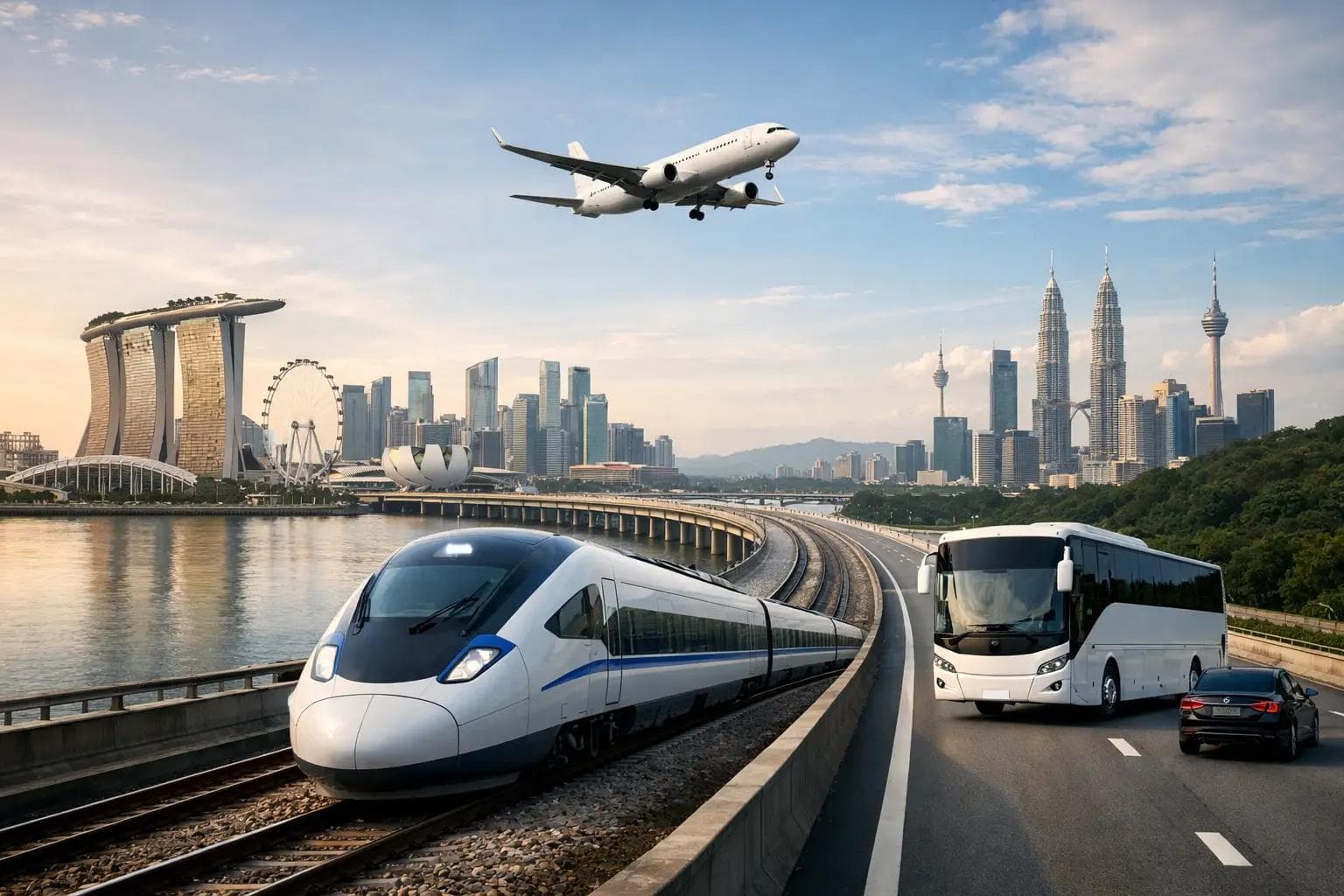
The best way to go from Singapore to Malaysia depends on your trip. Compare car, bus, train, and flights for speed, cost, and comfort.
Friday evening at Woodlands is where travel plans get tested. A route that looks simple on a map can turn into a long queue, a missed connection, or an expensive last-minute change. If you are figuring out the best way to go from Singapore to Malaysia, the right answer depends on one thing first - what you value most: speed, price, comfort, or predictability.
For most travelers heading to Johor Bahru, Kuala Lumpur, Genting Highlands, Malacca, or other major destinations in Peninsular Malaysia, there is no single mode that wins on every point. Public transport can be cheaper. Flights make sense for longer distances. Self-driving offers flexibility if you are comfortable with traffic, tolls, and border procedures. But for travelers who want door-to-door convenience, fixed pricing, and less hassle at immigration, a licensed cross-border private car is often the strongest overall option.
Best way to go from Singapore to Malaysia by travel type
The easiest mistake is comparing transport based on ticket price alone. Cross-border trips are rarely just one fare. You also need to think about transfers, waiting time, luggage handling, ride availability after arrival, and what happens if you are traveling with children, older parents, or a tight schedule.
If you are going from Singapore to Johor Bahru, a private car is usually the most efficient choice for convenience. The distance is short, but the border process can make the trip unpredictable. Staying in one vehicle from pickup to drop-off reduces friction. You avoid switching from taxi to checkpoint queue to another ride after immigration.
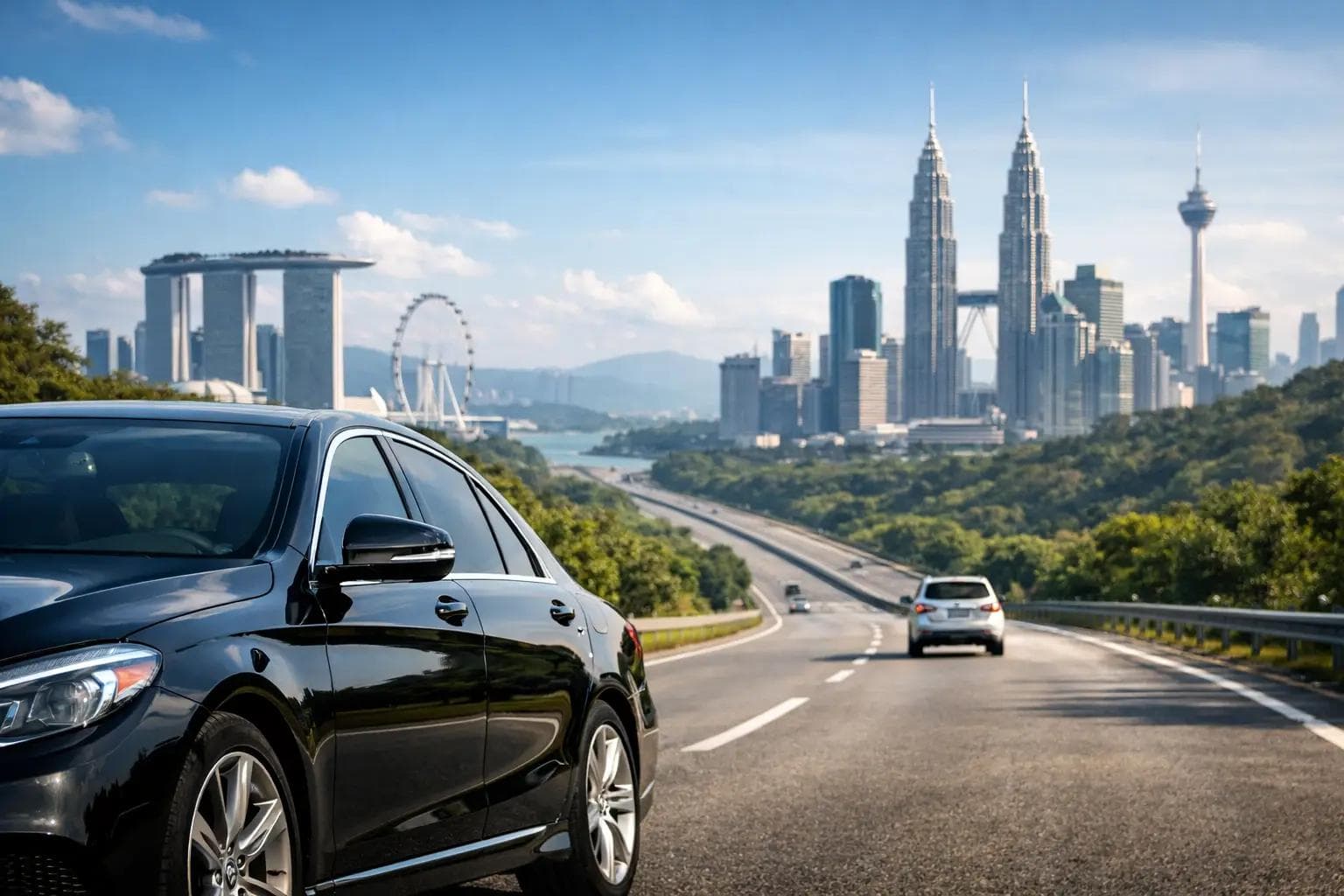
If you are going farther into Malaysia, such as Kuala Lumpur or Genting Highlands, the best option depends on how you want the day to feel. A flight can be faster in the air, but not always faster door to door once you add airport arrival time, baggage wait, and ground transfer. A private car takes longer in pure travel time, yet it gives you direct pickup, a more comfortable ride, and no extra coordination.
For budget travelers with light luggage and flexible timing, buses and trains can still work well. They just require more patience and more planning.
Private car: the strongest all-around option
For many families, couples, business travelers, and small groups, the best way to go from Singapore to Malaysia is a private cross-border car. The reason is simple: it removes the parts of the trip that usually cause stress.
You get picked up at your home, hotel, office, or airport in Singapore and dropped off directly at your destination in Malaysia. There is no need to drag bags between terminals, figure out where to queue for a second ride, or guess how much the final fare will be. The better operators use licensed and insured vehicles, fixed prices, and drivers who handle this route regularly.
The biggest advantage is continuity. One vehicle, one driver, one booking. At the checkpoint, you remain with the same transport arrangement instead of breaking the trip into pieces. That matters more than people expect, especially during weekends, public holidays, school breaks, and late-night arrivals.
This option is not the cheapest on paper if you are traveling alone and comparing against a bus seat. But once you split the fare across two to six passengers, the value changes quickly. For a family or small group, the cost per person can be reasonable, and the time savings are often worth it.
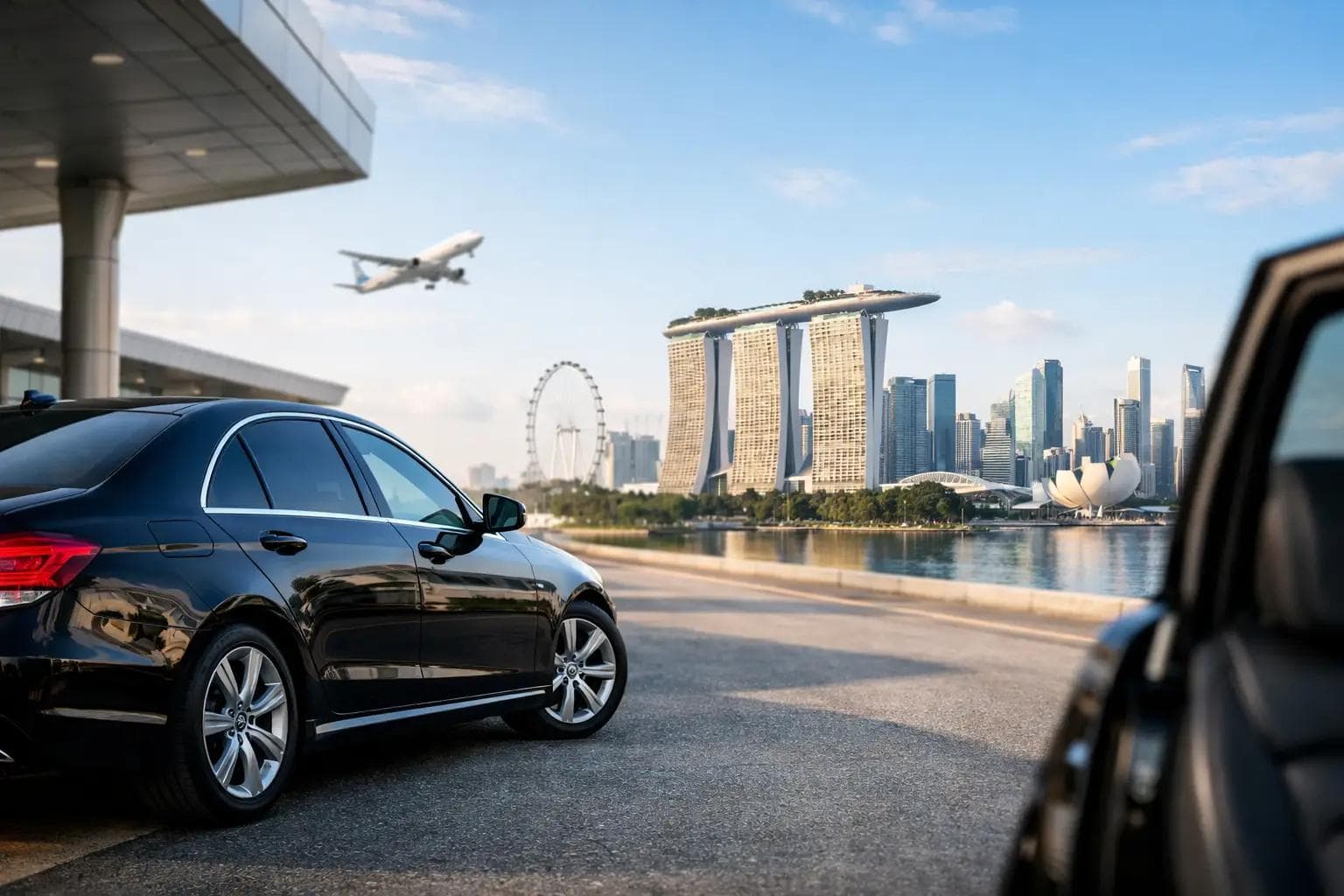
It is also the cleanest option for airport transfers. If you land at Changi and need to continue into Malaysia, a private car is far easier than managing luggage, customs, and multiple handoffs after a flight. This is where operators such as Luxway Taxi fit naturally - fixed-rate, cross-border service is built for exactly this kind of trip.
Bus: cheapest for many routes, but less predictable
Buses are popular because they are affordable and widely available. For travelers going from Singapore to Johor Bahru or Kuala Lumpur, there are many operators and departure points. If your priority is saving money and you are comfortable with some waiting, this can be a practical choice.
The trade-off is convenience. You need to get to the departure point on time, keep track of your luggage, disembark for immigration, and wait for the bus process to continue. Depending on traffic and checkpoint volume, delays can stretch the trip far beyond the scheduled duration.
This matters most if you are traveling with children, carrying multiple bags, arriving after a long flight, or trying to reach a hotel, meeting, or resort on a fixed timeline. The bus gets you across the border, but it usually does not solve the whole journey in one step.
Train: useful in specific cases, limited in flexibility
The train is often mentioned as a smarter alternative to the bus, especially for avoiding road congestion in certain segments. It can work well if you are heading through Johor and planning around fixed schedules.
Still, train travel is not always the most straightforward answer for cross-border passengers. Availability can be limited, timing may not suit your trip, and you may still need extra transport on both ends. For travelers who like structure and do not mind planning around departure times, it can be a good option. For travelers who want direct, flexible movement from point A to point B, it is usually less practical than a private car.
Flights: best for long-distance speed, not always total speed
If your destination is Kuala Lumpur, Penang, Langkawi, or another city deeper into Malaysia, flying can make sense. For solo travelers with minimal luggage and a destination close to the airport, the total journey may be efficient enough.
But flights are often judged by airborne time rather than real travel time. You still need to leave early for the airport, clear departure procedures, board, land, collect bags, and arrange transport at the other end. Add possible delays, peak-hour transfers, and airport traffic, and the margin over a direct private car can shrink.
This is why many business travelers and families still choose road transfer for Kuala Lumpur. It is longer, but it is simpler. You can work, rest, talk, or sleep without interruptions, and you arrive exactly where you need to be.
Self-driving: flexible, but more work than many expect
Driving yourself from Singapore to Malaysia gives you full control over timing, stops, and route. If you are familiar with cross-border driving rules, toll systems, parking, fuel, and insurance requirements, it can be a solid option.
The issue is that flexibility comes with responsibility. You need to manage traffic, checkpoint procedures, navigation, and local driving conditions. After a long workweek or a flight, many travelers decide that handling all of that is not worth the effort.
Self-driving also becomes less appealing if the trip is meant to be restful. A private car gives you the same door-to-door benefit without turning you into the person responsible for the entire journey.
How to choose the best way to go from Singapore to Malaysia
The best choice usually comes down to four questions.
First, how important is your time? If delays create real problems, choose the option with the fewest moving parts.
Second, how many people are traveling? Public transport looks cheapest for one person. For a group, a private car often becomes the smarter value.
Third, how much luggage are you bringing? The more bags, strollers, shopping, or equipment you carry, the less attractive transfers become.
Fourth, what kind of trip is this? A quick budget run to Johor is different from a family holiday, airport transfer, or client meeting in Kuala Lumpur.
That is why there is no honest one-size-fits-all answer. But if you want the option that performs well across the most situations, private cross-border transport is the strongest all-around choice.
When a private car is clearly the best option
There are some situations where the decision is much easier.
If you are traveling with children or elderly passengers, door-to-door service matters. If you are arriving at Changi and continuing into Malaysia, a direct transfer keeps the trip manageable. If you are carrying several bags, heading to a hotel or resort, traveling late at night, or going with a group, the convenience gap becomes obvious.
The same applies to travelers who simply do not want surprises. Fixed pricing, professional drivers, and a clear pickup plan remove a lot of uncertainty. That is often worth more than saving a little on the base fare.
The smartest cross-border trips are rarely about finding the absolute cheapest seat. They are about choosing the option that gets you there with the least friction. If you want a trip that starts on time, stays simple, and ends at the right doorstep, that is usually your answer.